

Updated:
If your broilers are not growing, do not start with a growth booster or random medication. First confirm that the flock is genuinely behind: weigh a representative sample, compare it with the correct target for the strain and age, then check feed, water, environment and health records. Slow growth is a result. The job is to find the cause.
This guide gives you a practical diagnostic order for a Nigerian broiler farm. It covers the nine common causes of poor growth and shows what to check before you spend more money.
First confirm that your broilers are behind
- Confirm the age. Count from placement day and verify the hatchery delivery record.
- Identify the strain. Ross, Cobb, Arbor Acres, Marshall and other commercial broilers do not share one universal target.
- Weigh a sample. Select birds from different parts of the house instead of catching only the largest or easiest birds.
- Calculate the average. Total sample weight divided by the number of birds weighed gives average body weight.
- Check uniformity. A reasonable average can hide many undersized birds.
- Compare correctly. Use the breeder performance objective for the stated strain, sex and age, or compare with your own healthy previous flock under similar conditions.
Average body weight = total weight of sampled birds ÷ number of birds sampled
Breeder targets describe performance under defined conditions. They are useful diagnostic references, not guarantees. Weather, feed specification, sex, disease challenge, housing and management affect field results.
Quick broiler slow-growth diagnostic
| What you observe | Check first | Likely direction |
|---|---|---|
| Most birds are small but fairly even | Feed intake, feed specification, temperature and strain target | Whole-flock management or nutrition problem |
| Large and small birds mixed together | First-week start, feeder/drinker access, chick quality and disease | Poor uniformity or unequal access |
| Feed intake suddenly falls | Water supply, heat, feed change, illness and feed quality | Recent environmental, health or feed event |
| Birds eat but weight gain is poor | Feed wastage, nutrient density, gut health and FCR | Poor conversion or incorrect consumption records |
| Wet litter and dirty breast feathers | Drinkers, ventilation, stocking density and gut health | Water loss, enteric disease or house-management problem |
| Respiratory signs, diarrhoea or rising deaths | Veterinary assessment and flock records | Health problem requiring diagnosis |
1. A poor start during the first seven days
The first week sets up later growth. Chicks that remain cold, fail to find water, eat late or compete for feeder space can lose early development that is difficult to recover fully.
- Preheat the brooding area before placement.
- Check floor and chick-level temperature, not room temperature alone.
- Distribute chicks near accessible feed and water.
- Check crop fill and chick behaviour after placement.
- Correct cold spots, draughts, crowding and poor ventilation quickly.
Chicks tightly clustered under heat may be cold. Chicks avoiding the heat source may be too hot. Uneven groups can indicate draughts or temperature variation. See the brooding management guide for placement and comfort checks.
2. Poor chick quality or hatchery problems
Chicks cannot all be managed into identical performance if they arrived dehydrated, weak, badly uneven or physically defective. Long transport, poor handling and delayed placement can compound the problem.

Record hatchery, delivery time, chick count, dead-on-arrival birds, seven-day mortality and seven-day sample weight. Compare suppliers over several batches rather than relying on appearance or a single flock.
3. Too little feed or an unbalanced diet
Broilers require the correct balance of digestible amino acids, energy, minerals and vitamins for each phase. Crude protein alone does not prove that a diet is adequate. Low energy, amino-acid imbalance, incorrect premix use, excessive fibre or poor pellet quality can all reduce performance.
- Confirm that the correct starter, grower or finisher feed was supplied.
- Check the manufacturer, batch number, production date and storage history.
- Measure feed issued instead of estimating from the number of bags purchased.
- Check feeder height, feeder space and visible wastage.
- If feed is self-mixed, verify the formula and every ingredient weight.
For phase-specific feeding decisions, use the Broiler Starter Feed Guide and the broader Poultry Feed Formulation Guide.
4. Poor feed quality, mould or storage damage
A formula can look correct on paper while the physical feed is unusable. Moisture, mould, rancid fat, insects, ingredient substitution and prolonged storage can reduce intake or nutrient value. Mycotoxins may damage gut and immune function without producing one unique visible sign.
- Reject feed with visible mould, an abnormal smell, heating or wet clumps.
- Store bags on pallets, away from walls and water.
- Use older acceptable stock first and keep batch records.
- Send representative samples for laboratory testing when a feed problem is suspected.
5. Inadequate water quantity or quality
Feed intake depends on water intake. A blocked nipple line, low pressure, empty tank, hot water or contaminated drinker can slow the entire flock quickly.

- Inspect flow at several points, including the end of each line.
- Record daily water use where possible.
- Clean tanks, lines and open drinkers using a farm-specific sanitation programme.
- Test source water when mineral content or microbial contamination is suspected.
A change in the farm’s normal water-to-feed relationship can warn of leakage, heat stress, illness or restricted access. Use your own trend rather than one universal ratio.
6. Heat, cold, poor ventilation or wet litter
Birds use feed for maintenance before growth. When they are too cold, energy is diverted to body heat. When they are too hot, they reduce feed intake. Poor ventilation increases moisture, carbon dioxide and ammonia and can worsen respiratory and litter problems.
- Observe bird distribution and behaviour throughout the house.
- Measure temperature and humidity at bird height.
- Maintain air exchange without creating a cold draught over young chicks.
- Repair drinker leaks and remove persistent wet litter.
- During hot weather, protect water supply and improve airflow before adding supplements.
Use the heat-stress management guide when panting, wing spreading or a heat-related fall in feed intake appears.
7. Overcrowding or unequal feeder and drinker access
Stocking density is not only birds per square metre. Bird weight, house design, ventilation capacity, feeder space, drinker access, season and welfare rules all matter. A density that works in a mechanically ventilated house may fail in a naturally ventilated pen during hot weather.
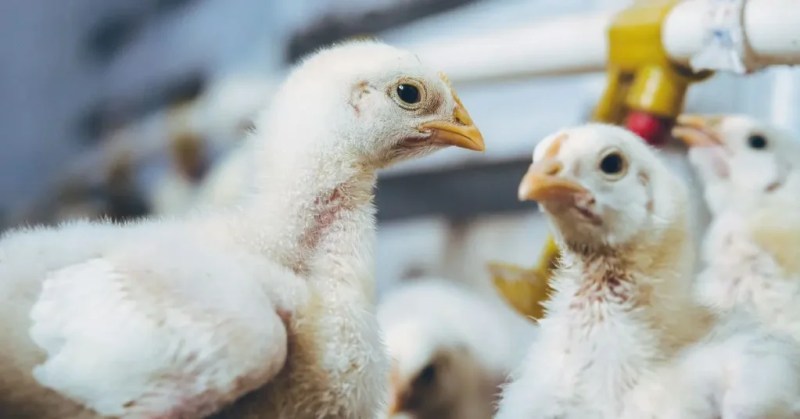
Watch the flock during peak feeding. Small birds repeatedly pushed away from feed and water will fall further behind. Adjust equipment height as birds grow and distribute access points so one area does not become congested.
8. Disease, parasites or poor gut health
Coccidiosis, bacterial or viral disease, worms in relevant production systems, and malabsorption problems can reduce intake, damage the intestine or worsen feed conversion. Slow growth alone cannot identify the disease.

Seek veterinary help promptly when poor growth occurs with rising mortality, bloody droppings, severe diarrhoea, respiratory distress, swollen joints, neurological signs, sudden feed refusal or a marked change in water intake. Do not treat a flock from droppings colour or growth rate alone. Diagnosis may require post-mortem examination and laboratory testing.
Prevention depends on hatchery quality, vaccination planning, clean water, feed safety, litter management and biosecurity. Review the broiler disease-prevention guide and the coccidiosis guide.
9. Poor records, feed wastage or the wrong comparison
Some apparent growth problems are measurement problems. The birds may have eaten less feed than the purchase record suggests because bags remain in storage or feed was wasted. A farm may also compare mixed-sex field birds with a male-only breeder target, use the wrong age or weigh only the smallest birds.
- Record feed purchased, issued, remaining and wasted separately.
- Subtract mortality and removals correctly when calculating live biomass.
- Use the same weighing method and time of day each week.
- Compare the flock with the correct strain, sex and age reference.
Calculate FCR before blaming the feed
FCR = feed consumed ÷ live-weight gain
Use feed consumed, not feed purchased. Weight gain should account for starting biomass and the effect of mortality. A poor FCR can result from feed wastage, low nutrient density, disease, mortality, heat stress or inaccurate records. It does not prove that one cause is responsible.
A 24-hour action plan for slow-growing broilers
- Weigh a representative sample and calculate average weight and uniformity.
- Confirm age, strain and the correct comparison target.
- Check water availability and flow throughout the house.
- Reconcile feed issued, remaining and visibly wasted.
- Inspect temperature, ventilation, litter and bird distribution.
- Review daily mortality, droppings and health signs.
- Calculate FCR when adequate weight and feed records exist.
- Call a poultry veterinarian when health warning signs accompany the growth problem.
Final answer
Broilers fail to grow when one or more parts of the production system restrict intake, digestion, comfort or health. Start with measurements, not assumptions. Weigh the birds, verify feed and water consumption, inspect the house, review mortality and calculate FCR. Correct the proven constraint and keep records so the next flock gives you an earlier warning.


